
Sapa
Mountain valleys, rice terraces and village walks
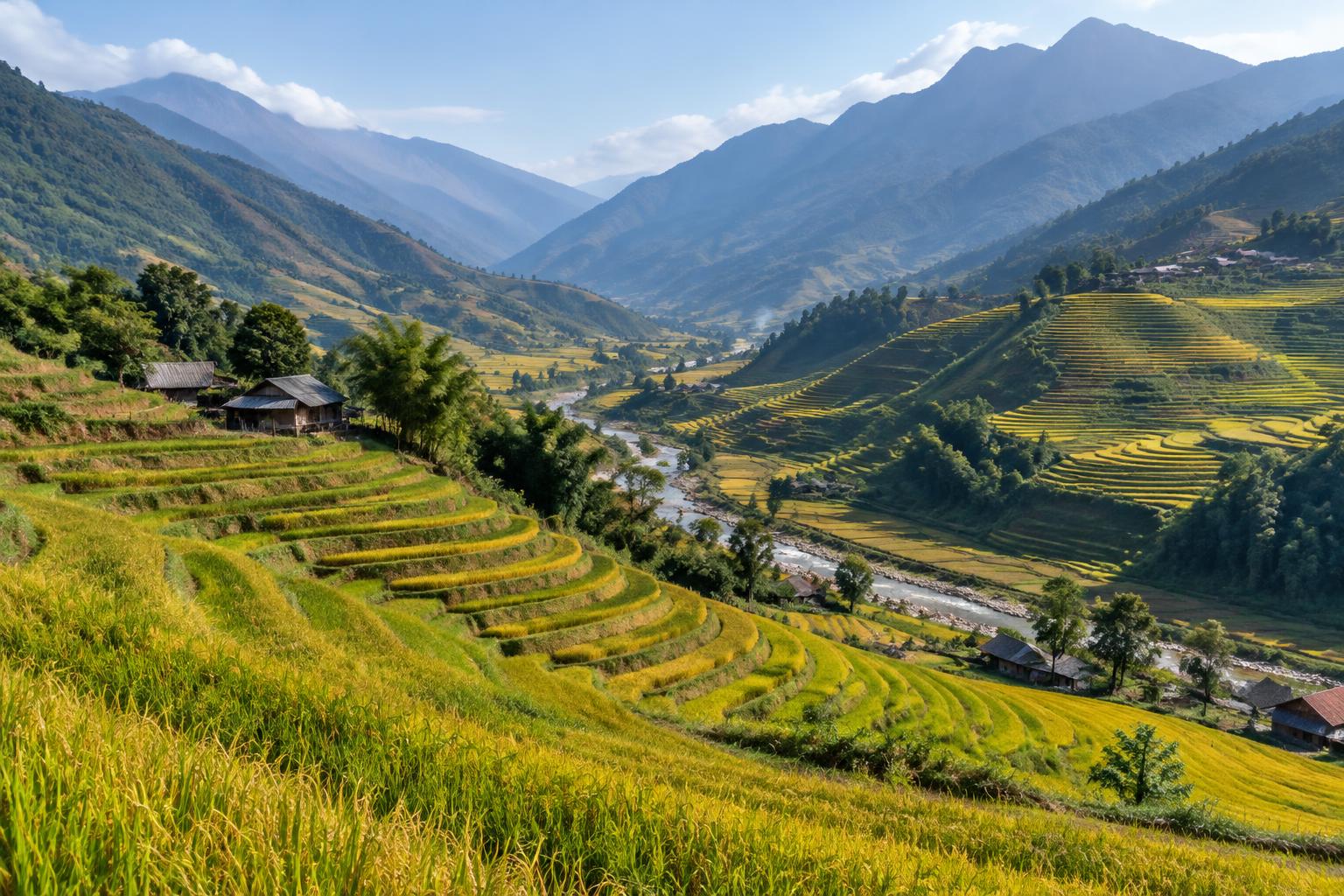
Sapa is a gateway to Vietnam’s northern mountains, but the town and the surrounding valleys offer quite different experiences. The centre is developed and busy; beyond it are terraced slopes, streams and villages where daily life follows the terrain and growing seasons. Choosing where to stay and how far to walk is key to shaping the visit.
The valley rather than a checklist
The Muong Hoa valley is known for rice terraces and village paths set beneath high mountains. Terraces may be green, golden, recently harvested or water-filled depending on the farming cycle. Cloud and mist can hide the view at any time. The appeal is not only a panorama: slower walks reveal field work, local architecture and the relationship between villages and their landscape.
Walks matched to your ability
Routes vary from short village visits to longer hikes on steep, muddy or uneven paths. A local guide can help explain the area and select a suitable route, but distance alone does not describe difficulty. Discuss elevation, footing, weather and opportunities to shorten a walk. Travellers with young children or mobility needs may prefer shorter outings and scenic transfers rather than a demanding trek.
Communities and respectful visits
Hmong, Dao and other communities live in the wider region. Villages are homes, not staged attractions. Ask before taking portraits or entering a house, buy directly and fairly when you choose local crafts, and avoid giving sweets or money to children. A homestay can be meaningful when expectations about shared facilities, meals and privacy are understood beforehand.
Mountain experiences
Fansipan can be considered separately from valley walking. The cable-car approach does not remove the effects of altitude or all of the steps around the summit area. Visibility and access depend on conditions. Do not make a mountain visit the only reason for a short stay; retain another activity if cloud or weather changes the plan.
How much time to allow
Two or three nights in the area gives room for walks, rest and uncertain weather. Travel from Hanoi is a significant part of the itinerary. An overnight train arrives in Lao Cai, followed by a road transfer to Sapa; road travel is another option. Allow time to recover before a longer hike and avoid pairing arrival with your most strenuous day.
Choosing Sapa tours for your Vietnam journey
A Sapa private tour should start with your walking ability and interest in village life, not a fixed trekking distance. Compare a gentler valley visit with a longer walking route and discuss accommodation access. Combine Sapa with Hanoi only after allowing for the mountain travel leg and recovery time. Weather and local conditions may change the practical route; a planning example is not an activity guarantee.
Practical travel information
Seasonality: Spring and autumn often suit walking, but weather changes quickly. Summer can be wet, and winter can be very cold. Harvest dates and clear mountain views are not guaranteed.
Pack for terrain: Bring supportive footwear, rain protection and layers. Discuss altitude-related concerns with a health professional when relevant, particularly before a high-mountain visit.
Before confirming: Check the exact walking difficulty, accommodation location, heating and homestay facilities. Train travel is to Lao Cai, not directly to Sapa.
Connect your Vietnam itinerary
Tell us about the trip you're imagining
Nothing here is priced or booked. Start a conversation and an Asiatravel specialist designs the journey around you.