
Ha Giang
Karst mountains, long views and a road journey worth planning carefully.
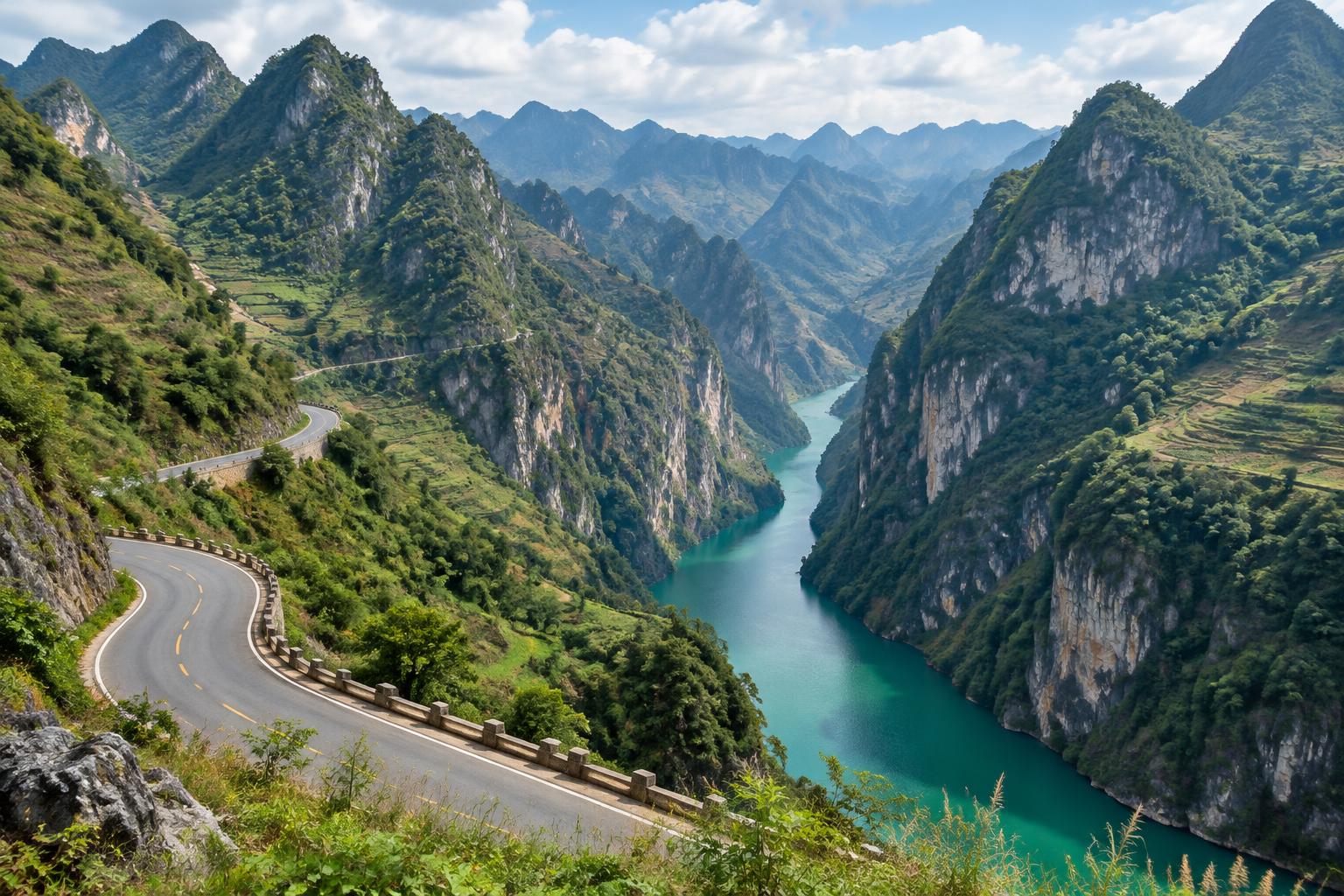
The Ha Giang travel region in Vietnam’s far north is known for dramatic karst mountains, passes and settlements shaped by difficult terrain. Dong Van and the Ma Pi Leng area offer a powerful landscape experience, but the road journey is a central part of the trip, not a minor transfer between sights. Choose this route only when you have enough time and are comfortable with sustained mountain travel.
Understand what the landscape journey involves
The Dong Van Karst Plateau brings exposed limestone, cultivated slopes and villages into close view. Ma Pi Leng follows a dramatic mountain setting above the Nho Que River. The interest is not only a single viewpoint: changes in terrain and settlement create a sequence that rewards a measured pace.
Avoid chasing every stop shown on a standard loop map. Road conditions, weather and the practicalities of your accommodation affect each day. A shorter geographic scope with time to pause may suit you better than a compressed circuit.
Choose transport around experience and comfort
Motorcycle travel is prominent in descriptions of the region, but it should not be treated as compulsory or automatically suitable. A driver-led vehicle route may be an option to discuss, with its own considerations about winding roads, space and access. Verify the actual arrangement rather than assuming a private tour eliminates road risks.
Anyone considering riding needs current checks on licence requirements, insurance, relevant experience and operating arrangements. This guide does not recommend self-riding for an inexperienced visitor. Share motion sickness, back problems and any difficulty with prolonged sitting before the route is designed.
Leave room for road time and rest
Reaching the region from Hanoi is a substantial journey, and mountain days continue to involve driving. Do not count every night as a full day available for walking and photography. Breaks, daylight and the driver's working arrangements all belong in the plan.
Several nights are generally more sensible than a hurried add-on, but the exact length depends on where you go. Avoid connecting an uncertain mountain transfer directly to an essential international departure. A specialist should assess the actual sequence and current access.
Make community visits respectful
Markets and villages can reveal different languages, clothing and livelihoods, but they are not performances arranged for tourists by default. Market schedules vary, and a visit should not promise a specific gathering or private household access without checking.
Ask before photographing people, especially children or those working. Do not enter homes, crops or restricted areas without permission. If you want a hosted cultural conversation, establish who is hosting and what has been agreed rather than relying on the phrase ethnic village visit.
Weather changes both views and safety
Fog, rain and cold conditions can alter visibility and road comfort. Mountain weather may differ significantly from Hanoi, so clothing and expectations need to reflect the actual route. A clear gorge view, flowering field or harvest scene cannot be guaranteed for a date chosen from an image.
Discuss alternatives if conditions make a section unsuitable. The decision to shorten a journey or skip a viewpoint can be good planning rather than a failure to complete the itinerary. Follow current local safety advice rather than pressing on for a photograph.
Verify access and room details
Ask a specialist to check any current border-area access or documentation requirements that apply to your route and passport. Do not use a general article as confirmation of eligibility. Local arrangements and administrative references can change, while familiar travel names remain in use.
Accommodation varies. Confirm bathrooms, bedding, heating or cooling as relevant, steps and dining options. Remote does not automatically mean quiet, comfortable or accessible. Choose details that suit your travellers rather than selecting only by a view.
Is Ha Giang right for this trip?
It suits travellers who value the road-based landscape experience enough to allocate the time and accept its demands. If you have limited nights, dislike winding drives or mainly want gentle countryside, another northern base may be a better match.
Tell the concierge how you want to travel, what matters most and what you want to avoid. Human review is needed for current routes, permissions, transport and safety-sensitive decisions before anything is confirmed. ## Ha Giang tours and mountain itinerary planning
Begin a Ha Giang private tour discussion with road comfort, available nights and your preferred transport. A mountain itinerary should leave room for breaks and changing conditions, not promise a fixed sequence of photo stops. Consider a focused northern Vietnam journey rather than adding Ha Giang to an already crowded nationwide route. Current access requirements, transport suitability and specific arrangements need specialist verification.
Practical travel information
Allow substantial mountain travel time. Verify current access, documentation, transport and insurance requirements. Share motion sickness and mobility needs; road conditions, views and activity suitability require human review.
Connect your Vietnam itinerary
Tell us about the trip you're imagining
Nothing here is priced or booked. Start a conversation and an Asiatravel specialist designs the journey around you.