
Hue
Imperial heritage beside the Perfume River
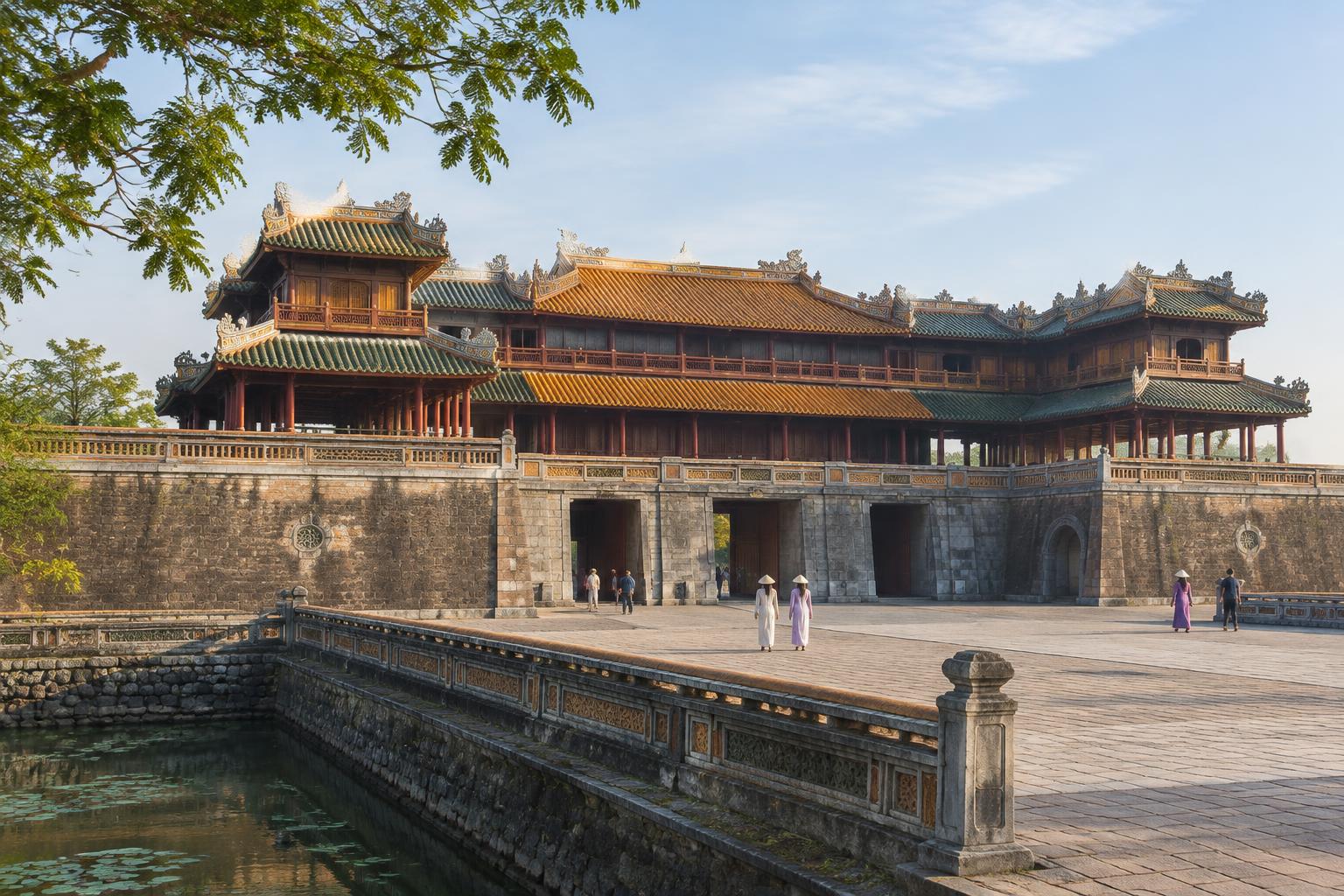
Hue gives a journey through Vietnam a different historical perspective. The former imperial capital is shaped by the Perfume River, fortified walls, ceremonial architecture and royal tomb landscapes. It rewards travellers who want context, not just photographs: knowing how the court, river and surrounding countryside were connected brings the sites to life.
Inside the imperial city
The Imperial City is the starting point for many visits, with gates, courtyards and surviving or restored buildings that form part of the UNESCO-listed Complex of Hue Monuments. It is a large outdoor site. A focused visit with time for shade and interpretation is usually more rewarding than attempting to cover every section in the heat.
Tombs, gardens and the river
The royal tombs outside the centre have distinct characters. Minh Mang’s landscape is associated with symmetry and water, while Tu Duc’s setting invites a slower look at gardens and pavilions. Khai Dinh’s tomb contrasts with them through its hillside position and elaborate decorative work. Select one or two rather than treating them as interchangeable stops. Thien Mu Pagoda can add another perspective on the river and the city’s religious life.
Food as part of the visit
Hue’s food traditions range from bun bo Hue to small savoury dishes such as banh beo. A market or food-focused outing can help connect the city’s heritage with everyday life. Heat levels and ingredients vary; discuss dietary preferences before choosing meals. A quiet meal and a riverside pause can balance a day spent among historical sites.
How much time to allow
Two nights provides a practical introduction: a day for the Imperial City and urban life, and another for selected tombs or the countryside. A longer stay suits travellers who prefer detailed historical interpretation and slower days. A brief stop is possible, but attempting the citadel and many outlying sites in one day makes the experience transport-heavy.
Connecting central Vietnam
Hue combines naturally with Hoi An via the Da Nang area. Road journeys can include the Hai Van Pass when suitable, while rail offers another scenic connection along the coast. Allow a transfer day rather than counting the journey as a full sightseeing day in either city. Heritage visits and beach time can then complement each other without constant packing.
Hue tour ideas and central Vietnam routes
A Hue private tour can prioritise imperial history, regional food or a slower riverside stay. Choose a manageable selection of heritage visits rather than covering every tomb in one day. If continuing to Hoi An or Da Nang, treat the journey between cities as part of the route with time for rest. Ask about walking distances, shade and the exact inclusions of any guided visit.
Practical travel information
Getting there: Hue has airport and rail connections. The monuments outside the centre are spread out, so transport planning is important.
Seasonality: Summer can be very hot. Later in the year, heavy rain and flooding may disrupt visits and transfers. Build flexibility around local forecasts rather than relying on a single ideal season.
Site visits: Bring sun protection, water and comfortable footwear. Many sites involve outdoor walking and steps; discuss accessibility in advance. Cover shoulders and knees at religious sites.
Connect your Vietnam itinerary
Tell us about the trip you're imagining
Nothing here is priced or booked. Start a conversation and an Asiatravel specialist designs the journey around you.