
Hoi An
Merchant-house heritage, lanterns and countryside time
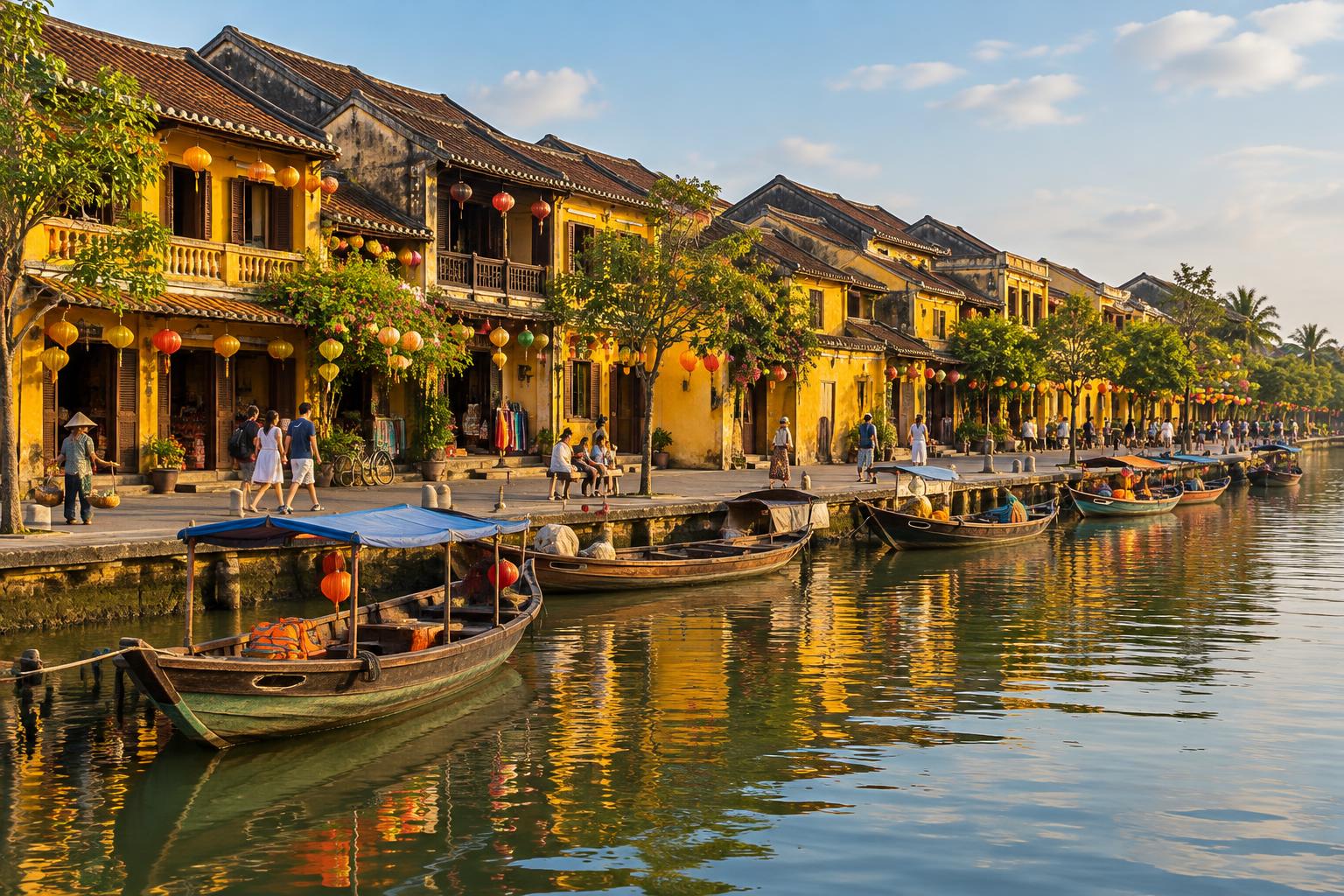
Hoi An’s appeal starts with its historic streets but extends beyond them. Merchant houses, tiled roofs and riverside lanes recall the town’s trading past, while the surrounding countryside and coast offer a slower counterpoint. The UNESCO-listed Ancient Town is especially atmospheric early in the day, before the busiest evening hours.
Looking beyond the lanterns
Explore selected historic houses, assembly halls and the area around the Japanese Covered Bridge with time to understand the town’s cultural influences. Access arrangements can change, so plan around current local guidance. Rather than spending every evening on the most crowded streets, visit at different times: morning cafés and quieter lanes reveal a different character from the lantern-lit waterfront.
Food, crafts and everyday encounters
Cao lau, mi Quang and other central Vietnamese dishes help make food part of the journey. A cooking activity can be a pleasant way to learn about ingredients if it matches your dietary needs. Hoi An also has a tailoring tradition, but fittings require time; quality, materials and delivery should be agreed directly before committing. Craft visits are best chosen for genuine interest rather than added automatically to a sightseeing circuit.
Countryside and coast
The lanes around Tra Que and nearby agricultural areas can suit gentle walking or cycling, depending on traffic and heat. An Bang and other nearby beaches may provide downtime when conditions are suitable. Hoi An’s coast is seasonal: rough seas, rain and erosion can affect the experience. Beach time is an option, not a guarantee of swimming weather.
How much time to allow
Three or four nights gives space for the Ancient Town, a countryside outing and a quieter day. A two-night stay can provide an introduction if you focus on fewer activities. My Son Sanctuary, a separate heritage site inland, may suit travellers interested in Cham history; it requires its own travel time and outdoor walking.
Choosing a base
Staying close to the Ancient Town favours walking and evening access. A countryside or coastal base can feel more relaxed but adds transfers. Discuss what matters most: a short walk to dinner, a quieter setting, beach access or reduced time in a vehicle. Hoi An is reached through the Da Nang area and pairs naturally with Hue.
Hoi An tour ideas and holiday planning
A Hoi An private tour might combine a focused heritage walk with food or countryside time, while leaving another day less structured. Decide whether staying near the town or coast better suits your priorities. For a central Vietnam itinerary, compare Hoi An with Hue and Da Nang without repeating similar visits. Dietary needs, walking comfort and seasonal beach expectations belong in the brief before arrangements are proposed.
Practical travel information
Getting there: Da Nang provides the main airport and rail connections for Hoi An, followed by a road transfer. Hoi An does not have its own passenger railway station.
Seasonality: Spring and much of summer can suit outdoor time, though heat may be intense. Later-year heavy rain and flooding can affect the Ancient Town; sea conditions vary throughout the year.
Walking and cycling: Streets and paths can be uneven or wet. Check cycling routes and child equipment beforehand. At heritage and religious sites, follow dress, ticket and photography rules.
Connect your Vietnam itinerary
Tell us about the trip you're imagining
Nothing here is priced or booked. Start a conversation and an Asiatravel specialist designs the journey around you.