
Family Travel
A Vietnam journey that works for every age.
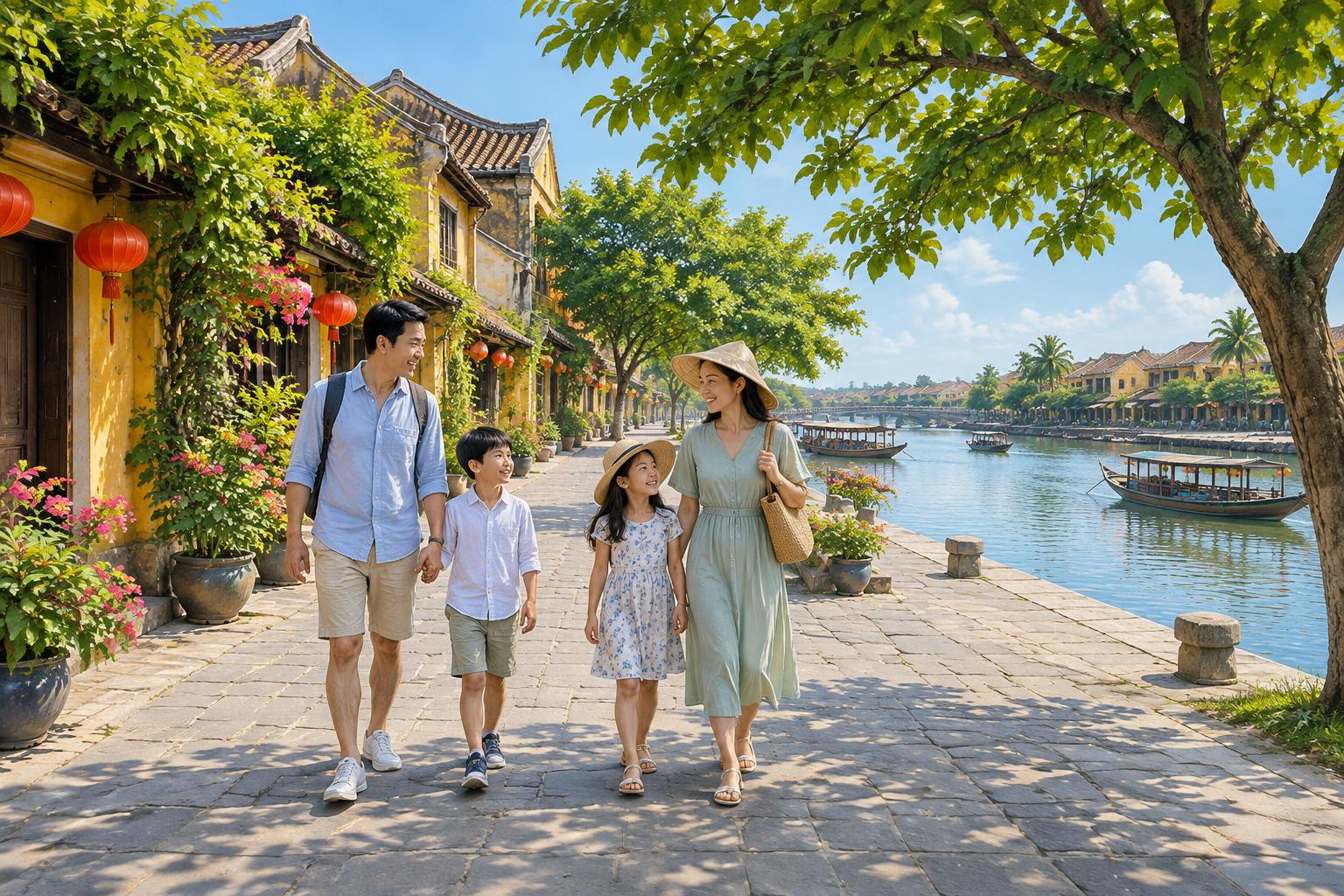
A family trip to Vietnam works best when the itinerary reflects the actual children travelling, not a generic idea of what families enjoy. Ages, routines, curiosity and energy vary widely. The aim is to create shared discoveries while preserving enough predictability for meals, sleep and quieter time. Fewer hotel changes and shorter activity blocks often matter more than adding another famous destination.
Start with ages and daily routines
Share each child's age, usual sleeping pattern, food preferences and tolerance for drives or flights. A toddler needing an afternoon nap and a teenager interested in photography require different days. Mention motion sickness, allergies and any support needs before a route is proposed.
Ask adults to identify their priorities too. A family holiday should not become a continuous children's programme that nobody else enjoys. Alternating a focused cultural visit with food, a boat outing or open time can create common ground without expecting every traveller to like the same activity.
Choose fewer bases and protect arrival time
After an international flight, a light first day is usually more realistic than a full sightseeing schedule. Choose accommodation where you can rest, find a meal and settle in without another long journey. An extra night can be more valuable than a rushed excursion.
For roughly ten nights, two or three bases may provide sufficient variety. A northern city-and-landscape route or a central heritage-and-coast route can each form a complete trip. These are illustrative approaches, not fixed packages. Select the region by season and family interests rather than attempting the whole country.
Northern Vietnam: city discovery and landscape
In Hanoi, short neighbourhood walks and small food discoveries can work better than several consecutive museums. Busy traffic and uneven pavements require supervision; a stroller is not equally convenient on every street. Ask for walking routes and rest stops that suit your family.
Ninh Binh or a bay outing can add a different setting. Check boarding, seating, toilets and the time spent on a boat. Children's life jackets, cabin arrangements and the suitability of optional water activities need explicit confirmation. A scenic photograph does not establish that the activity is suitable for your child's age.
Central and southern alternatives
Hoi An can combine a shorter heritage visit with food, countryside and rest near the coast. A hands-on activity may be engaging, but confirm minimum ages, supervision and whether children actually participate. Beach swimming depends on conditions and should never be assumed safe because a property has beachfront access.
Ho Chi Minh City suits families interested in food and city life, but some museums contain difficult material. Choose visits with the children's ages and sensitivities in mind. A Mekong Delta programme should be assessed for journey length, heat, boat access and the accommodation setup rather than labelled automatically child-friendly.
Confirm rooms, transport and supervision
Ask about the exact bedding, occupancy rules, connecting-room availability and any steps or balconies relevant to younger children. A family room title does not guarantee separate sleeping spaces or a cot. Pool access also does not imply lifeguard supervision.
For transport, explain luggage, strollers and any child-restraint requirements. Confirm availability and suitability of child seats before relying on them. Guides and drivers are not automatically childcare providers; adults remain responsible for supervision unless a specific, appropriate service has been agreed.
Food, heat and personal health planning
Mix unfamiliar tastes with predictable meals and keep water and rest available. Tell your planner whether a dietary restriction is a preference or a serious allergy. Shared kitchens and ingredient substitutions do not guarantee freedom from cross-contact.
Discuss personal medical needs and travel preparation with a qualified clinician. Carry prescribed medication and understand your insurance arrangements. Outdoor schedules should allow shade and breaks; a dry season can still be very hot. If a child is tired, shortening the day is often better than protecting every item on the itinerary.
Give older children a role in planning
Invite school-age children or teenagers to choose one activity, dish or subject they want to explore. A short photography walk, a cooking activity or a countryside outing can create a personal connection. Do not promise animal encounters, workshops or water activities before suitability and operation are verified.
Leave some unscheduled time. A pool, cafe stop or familiar evening meal can help everyone recharge. The most memorable family moments may be small discoveries rather than the most expensive activity on the schedule.
Questions to settle before a proposal
Provide ages, room preferences, food restrictions, walking limits and the longest comfortable transfer. Ask how the plan changes in bad weather and which activities can be shortened. Clarify inclusions and costs in the actual proposal rather than assuming that children's services or discounts are standard.
AI can help organise your brief, but a specialist needs to verify rooms, seats, activity eligibility and current arrangements. The result should be a realistic family journey rather than a checklist carrying an untested family-friendly label.
Practical travel information
Share children’s ages, routines, allergies and room needs. Verify child seats, bedding, life jackets and activity eligibility individually. Seek qualified advice for personal health preparation; general family guidance is not a safety guarantee.
Tell us about the trip you're imagining
Nothing here is priced or booked. Start a conversation and an Asiatravel specialist designs the journey around you.