
Culture & Heritage
Dynasties, temples and living tradition
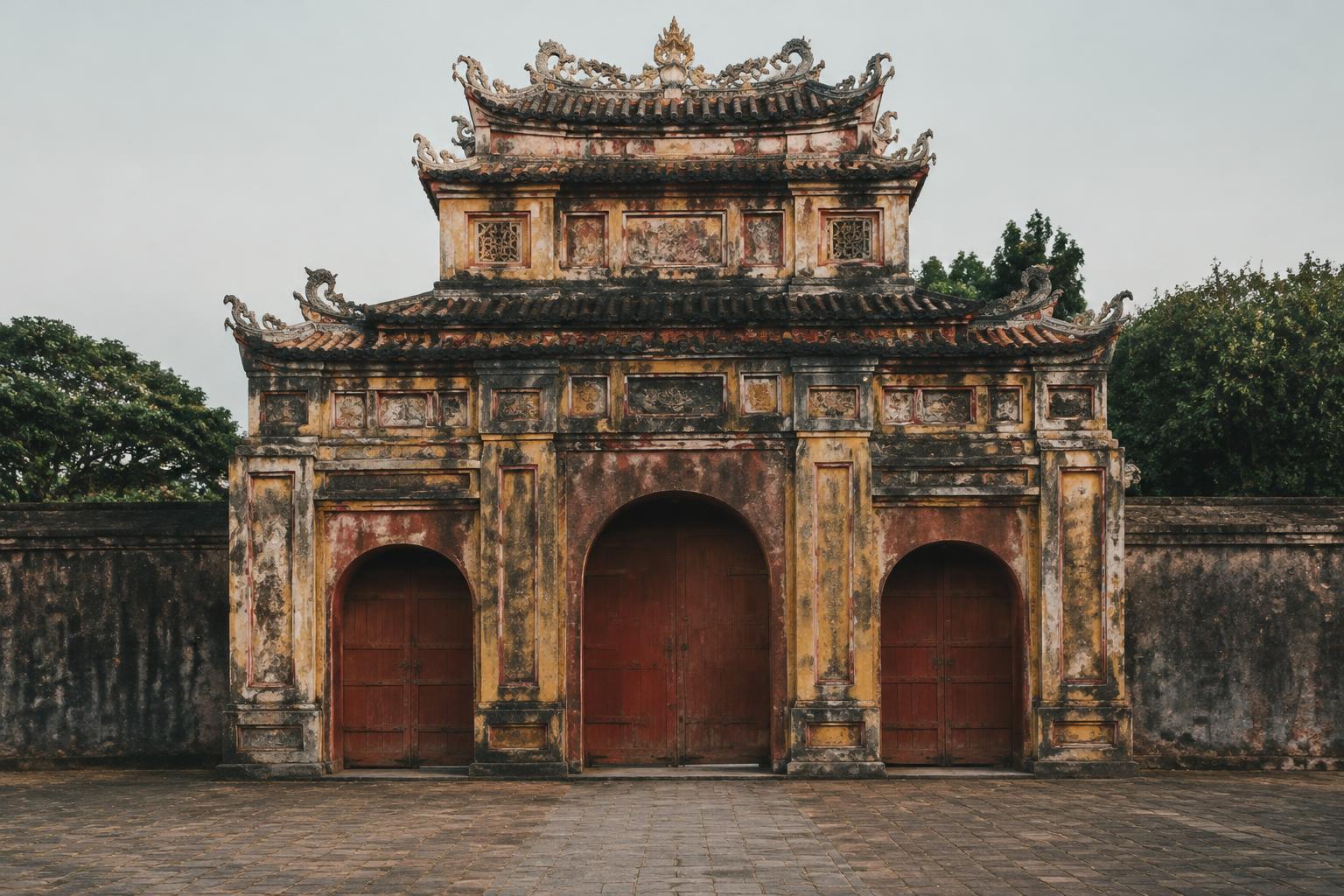
A cultural journey through Vietnam becomes more rewarding when you connect what you see with how people live. Imperial architecture, trading-port streets and Cham temples reveal different histories; markets, places of worship and everyday crafts show how those histories continue. Rather than collecting monuments, choose a few places to explore properly and leave space for questions, food and ordinary neighbourhood life.
Choose the historical thread that interests you
For imperial history, Hanoi and Hue offer a useful contrast. Hanoi's Temple of Literature introduces traditions of scholarship, while Hue's monuments and royal tombs illuminate the Nguyen dynasty. For maritime trade, Hoi An's merchant houses and assembly halls make a different starting point. My Son, inland from Hoi An, introduces Cham religious architecture rather than another version of the imperial story.
These are not interchangeable stops. A traveller fascinated by architecture may want time to notice building materials and restoration; someone interested in family history may prefer museums and conversations. Decide what you want to understand before deciding how many sites to include.
Northern Vietnam: scholarship and street life
In Hanoi, combine a significant historical visit with a walk through lived-in streets rather than another museum immediately afterwards. A morning at the Temple of Literature followed by a neighbourhood lunch can connect formal education with the rhythms of the present-day city. Craft visits outside the centre can add another layer, but workshops remain working spaces and access should be agreed rather than assumed.
Ninh Binh offers a contrasting landscape where historical and spiritual sites sit among limestone hills. If your interest is cultural rather than strenuous, balance a site visit with a boat excursion instead of adding every viewpoint. The landscape and its settlement history are part of the experience, not simply a scenic break.
Central Vietnam: imperial, trading and Cham histories
Hue, Hoi An and My Son work well as a connected cultural sequence because each answers a different question. In Hue, consider how ceremonial spaces, tomb landscapes and the Perfume River shaped an imperial capital. In Hoi An, notice how buildings and religious spaces reflect a trading town's different communities. At My Son, concentrate on what remains of the temple groups and the context of conservation.
A guided explanation can help distinguish original fabric from reconstructed or restored sections. Heat and walking matter here: plan breaks and do not treat an exposed archaeological site as an effortless add-on to a full town tour.
Southern Vietnam: museums and everyday perspectives
Ho Chi Minh City suits travellers who want to connect modern Vietnamese history with the energy of a large commercial city. Museum visits can be emotionally demanding, especially for children or anyone with a personal connection to war. Choose deliberately and allow time afterwards rather than rushing to a cheerful activity on schedule.
In the Mekong Delta, focus on how waterways, farming and settlement shape daily life. A market or household visit should be arranged respectfully. Nobody's home or workplace is automatically a visitor attraction, and access is not guaranteed simply because it appears in an itinerary idea.
Build a day with depth rather than volume
An illustrative cultural day might include one main site in the morning, a relaxed lunch and a shorter neighbourhood walk later. This is a pacing suggestion, not a fixed tour or included service. A second major site may make sense if locations are close and everyone remains engaged; a third can become a blur.
Group interests matter as much as travel distance. If one person loves museums and another prefers street photography, alternate focused visits with open time. A smaller number of well-understood places usually produces richer memories than a long checklist.
Etiquette at sacred sites and craft workshops
Carry clothing that covers shoulders and knees and follow the specific rules at each site. Remove shoes where requested, keep voices low and avoid interrupting prayer. Ask before photographing worshippers, children or workers. Do not touch objects, enter restricted areas or assume that flash photography is allowed.
At workshops, distinguish a genuine working visit from a retail stop. Ask what the visit involves, whether demonstrations are scheduled and whether purchases are optional. Declining to buy should remain possible without pressure.
Questions to resolve before setting the route
Share your main historical interests, tolerance for museum time, walking limits and any sensitive subjects. Ask about steps, uneven surfaces, shade and access to toilets rather than relying on the phrase 'easy visit'. If a cultural event matters, verify its date and public access separately; lunar-calendar events do not occur on the same Western-calendar date each year.
For a first cultural trip, Hanoi plus central Vietnam offers several distinct historical layers. Add the south when modern history and delta life are priorities, not merely to claim that you have covered the whole country.
Further reading
UNESCO — Complex of Hue Monuments: https://whc.unesco.org/en/list/678/
UNESCO — Hoi An Ancient Town: https://whc.unesco.org/en/list/948/
UNESCO — My Son Sanctuary: https://whc.unesco.org/en/list/949/
Practical travel information
Share historical interests, walking limits and any sensitive museum subjects. Verify current site access, festival dates and workshop arrangements. Cover shoulders and knees where required, follow photography rules and ask permission before photographing people.
Tell us about the trip you're imagining
Nothing here is priced or booked. Start a conversation and an Asiatravel specialist designs the journey around you.